See also


 24.03.2026 12:19 AM
The British pound strengthened sharply against the US dollar on Monday after President Donald Trump announced a decision to delay military actions against Iran, stating that negotiations between the countries are progressing productively and may lead to de-escalation of the conflict in the Middle East. The rise of the pound was attributed to a reduction in geopolitical risks and falling oil prices, which put pressure on the dollar.
The weakening of the US currency was also reflected in the dollar index (DXY), which fell by 0.55%. This further supported the pound's exchange rate. Trump's post on the social media platform Truth Social, where he described the negotiations with Tehran as "very good and productive," contributed to improved sentiment in global markets. However, Iranian media denied the existence of direct or indirect contacts between the two countries.
Despite this contradiction, investor reaction was generally positive: Wall Street stock indices opened higher, while oil prices fell, further pressuring the dollar. Fatih Birol, the head of the International Energy Agency (IEA), stated that the current Middle Eastern crisis is having a greater impact on the energy market than both oil shocks of the 1970s combined, overshadowing the consequences of the conflict between Russia and Ukraine on gas supplies.
Against the backdrop of ongoing geopolitical uncertainty, major central banks that are in a cycle of monetary policy easing kept interest rates unchanged last week. This intensified doubts about the potential consequences of the Middle Eastern conflict for the global economy. Money markets are pricing in a moderate probability (about 52%) of the Bank of England raising the key rate at its June 18 meeting. Meanwhile, US markets do not expect a rate cut from the Federal Reserve and are assessing the likelihood of a 5-basis-point policy tightening at the June 17 meeting.
Fed officials are still closely monitoring energy price dynamics. Chicago Fed President Austan Goolsbee noted that he remains optimistic about the possibility of rate cuts by the end of 2026, but stronger evidence of sustained inflationary decline is needed for that to happen. He stated that current price risks are shifting toward inflation acceleration, and the key question is how long it will take for rising oil prices to significantly impact the economy.
In this context, Fed official Stephen Miran emphasized that the agency should not make decisions influenced by short-term events, as the balance of risks remains uncertain and hinders active measures in any direction.
From a technical perspective, prices are trying to hold above the 200-day SMA; if successful, bulls will have a chance. It is also worth noting that the Relative Strength Index (RSI) is close to positive territory, indicating bullish sentiment. The next obstacle will be the round level of 1.3500 or the 50-day SMA.
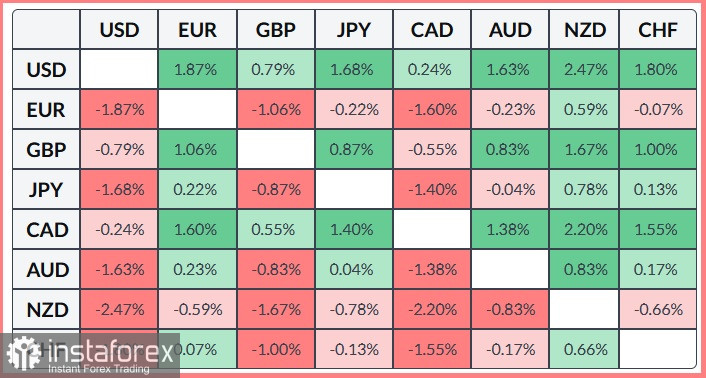
The table below shows the percentage change of the British pound against major currencies this month. The British pound has shown the greatest strength against the New Zealand dollar.