
Lihat juga


 04.09.2026 09:25 PM
Gazing into a coffee cup is a hopeless pastime, yet that's exactly what Forex is doing ahead of the Fed meeting. A September rate hike is like a coin toss — nobody dares predict the outcome.
Formally, the dollar has some trump cards: inflation remains above target. But MUFG argues that even a rate increase is unlikely to be decisive. The ECB, Bank of England, and RBA are more hawkish than expected, and rate differentials are unlikely to swing sharply in the greenback's favor. What matters is not the fact of a hike but the signal — whether it marks the start of a cycle or is a one?off adjustment. MUFG's base case is the latter, which creates short?term upside risks for the dollar versus the euro without overturning the broader bearish view.
Treasury yields and the dollar dynamics
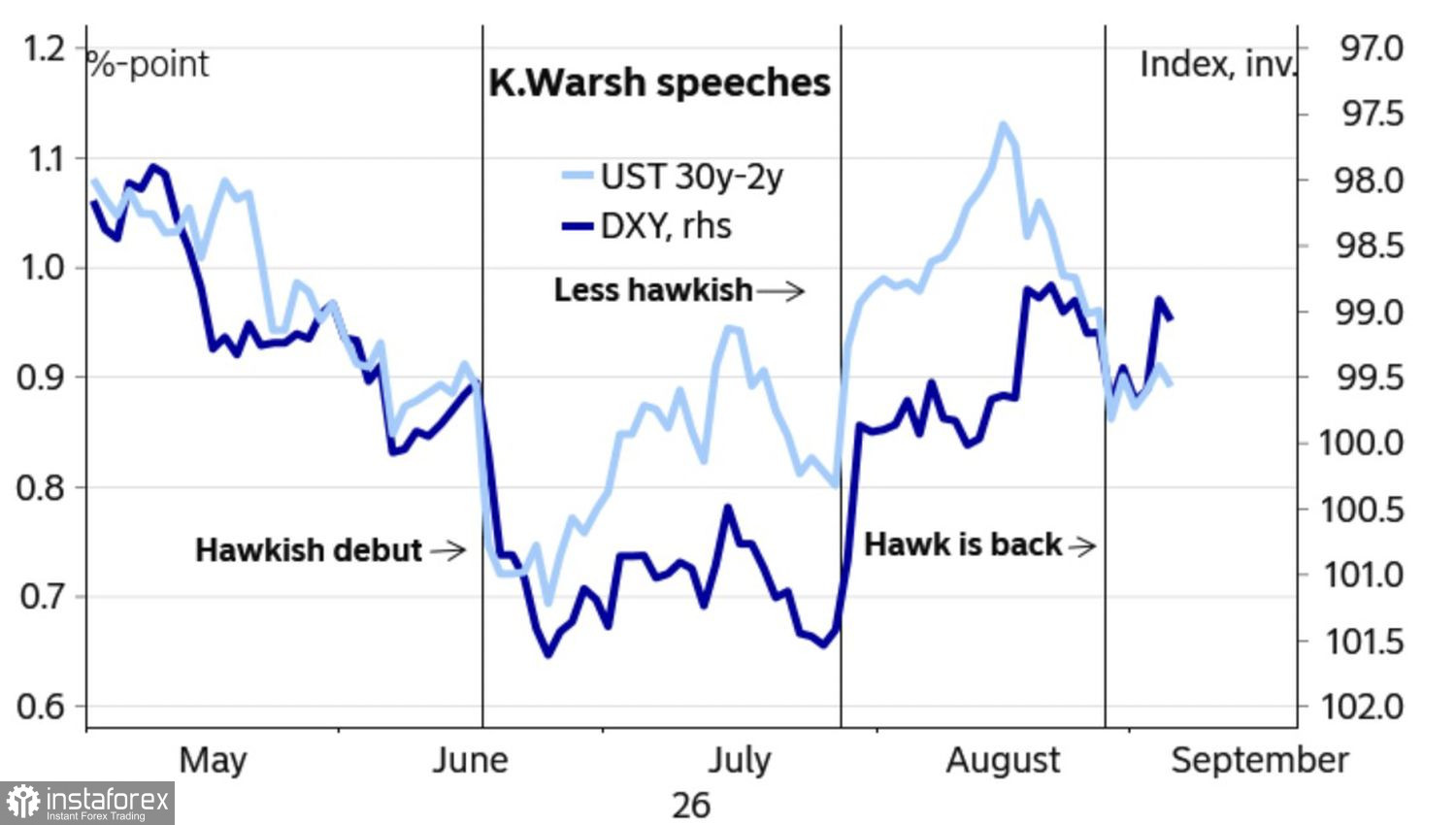
The Fed's hands are tied by more than just data. With two months until the midterm elections, large fiscal tightening is off the table. Monetary policy remains the only tool. The risk is asymmetric: if the Fed refrains from moving despite strong data, investors will demand risk premia and lose confidence, pushing yields higher and the curve steeper — as happened after July. Tightening would have avoided much of that.
The dollar's sharp slide in the first half of 2025 was a story of the narrative turning against US exceptionalism. Trade policy crowded out pro?cyclical measures, political uncertainty rose, and growth shifted toward Europe — helped materially by a German fiscal package. The dollar stabilized when the noise subsided. But structural weaknesses — fiscal outlook, term premium and trust issues — keep the bearish case for the greenback alive. In the short term, the picture is less one?sided: the eurozone is resilient and inflation there has unexpectedly picked up.
ECB rate outlook
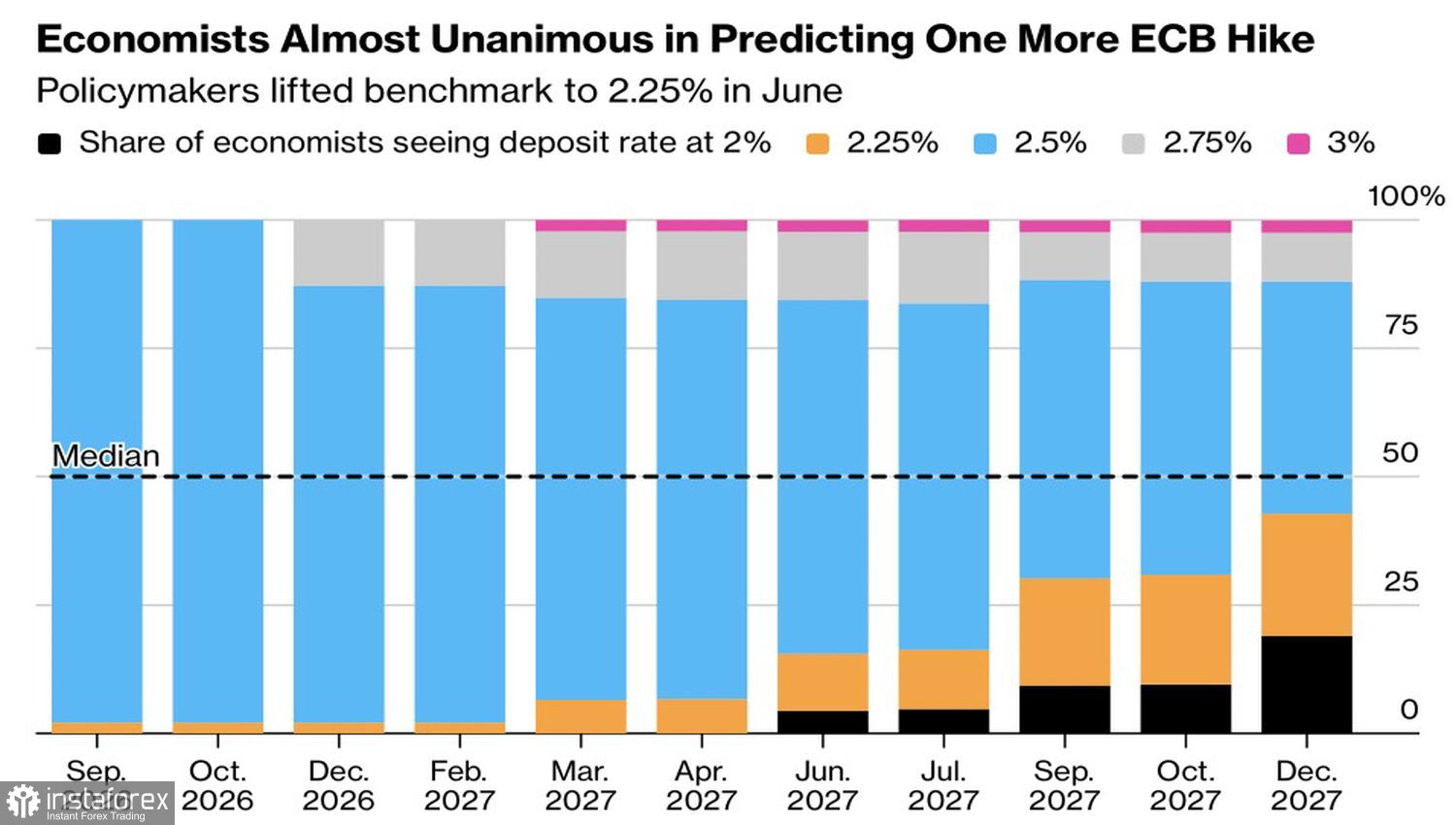
The ECB itself faces a tricky calibration. Bloomberg economists expect one hike to 2.5% followed by a pause through 2027 — a dovish scenario versus traders pricing roughly three more moves into mid?next year. The divergence is widening amid Middle East escalation: oil is moving back toward $100, and gas is rising to 2023 levels. A 25?bp step looks necessary, but it is unlikely to trigger a sustained euro rally.
ANZ notes that EUR/USD's rise above 1.17 in August reflected not just dollar weakness but eurozone resilience. GDP grew 0.4% in Q2 and PMI has been rising for months. The policy meeting on September 9–10 will bring the ECB's first projections since June; they should confirm resilience and support the euro. The risk is that the bank focuses on energy?driven disinflation and trims forecasts, which would cap the instrument's rally.
Either way, the dollar and euro are playing the same game in September under different rules — each side is waiting for the other central bank to blink first. Who will do it earlier?
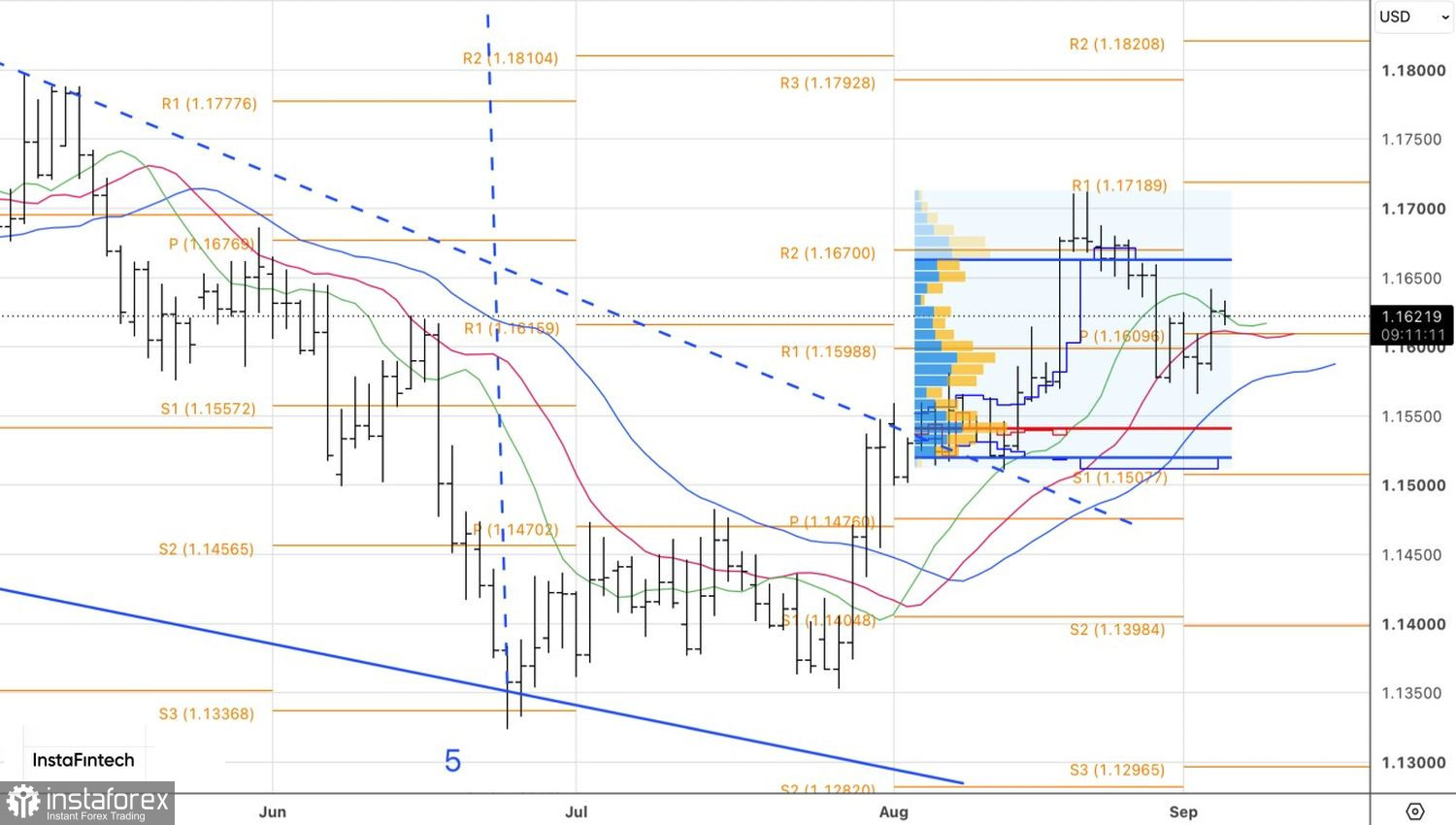
Technically, on the daily chart, a break below 1.1610 in EUR/USD would be a sell signal. Conversely, a move above 1.1635 would be a buy signal.


