
Veja também


 23.03.2026 02:14 PM
Amid the Federal Reserve's hawkish rhetoric and a stronger dollar, global financial markets move into a heightened state of nervousness: gold and silver are entering a multi-week selloff, and investors continue to shift into more defensive instruments.
At the same time, the geopolitical crisis around Iran is striking energy infrastructure and logistics, causing oil to rise and LNG shipments to slump sharply. Thus, a key commodity is facing disruptions to routes through the Strait of Hormuz.
Meanwhile, a shortage of semiconductor memory is pushing up prices in the consumer segment: Apple is raising the cost of external SSDs, and manufacturers are forced to reallocate capacity to HBM for artificial intelligence.
All these factors together create divergent impulses for commodities, currencies, energy, and the technology sector. These are the events we recommend watching closely over the next couple of days.
Gold and silver: selloff amid dollar strength and Fed's hawkish policy
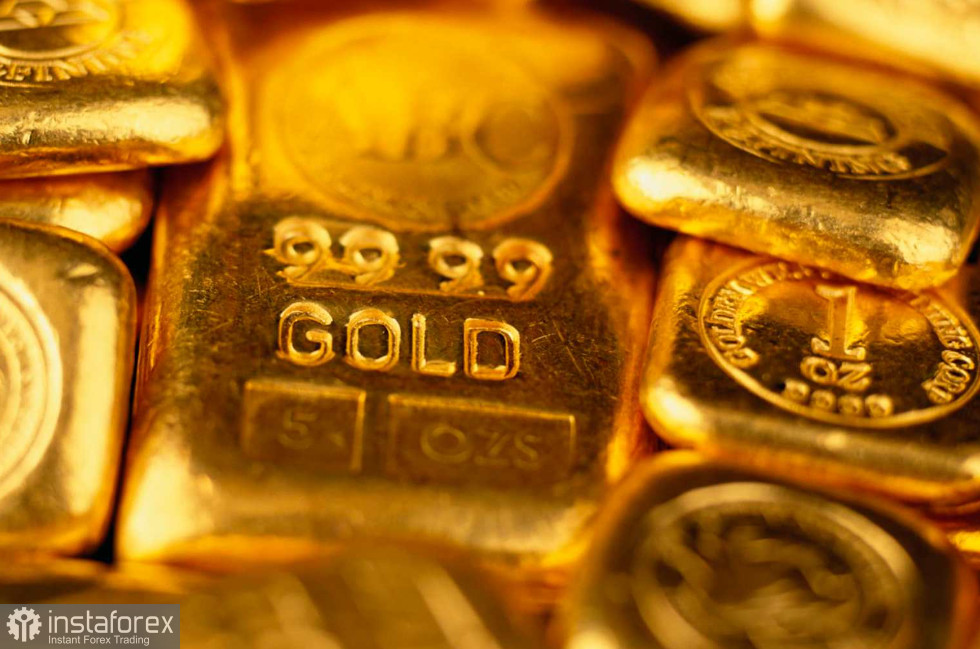
Gold and silver continue to suffer a painful selloff ahead of the new trading week. Precious metals are undergoing a multi-week decline against the backdrop of the Federal Reserve's hardline stance, a strengthening US dollar, and inflation concerns that are being exacerbated by a sharp rise in energy prices due to the war in Iran.
At the start of the trading session, gold futures fell sharply, extending losses that are making March 2026 one of the weakest months for the precious metal in recent memory. According to The Wall Street Journal, front-month gold futures were trading around $4,370 as of late Sunday, more than $200 below the previous session's level.
According to Trading Economics, gold has already lost about 14 percent since early March after reaching an all-time high of approximately $5,608 in January. Pressure on the market persists: Bloomberg reported that gold could be headed for its largest weekly drop since 1983. The reason is the rise in energy prices related to the military conflict in Iran, which reduces the likelihood of imminent monetary policy easing.
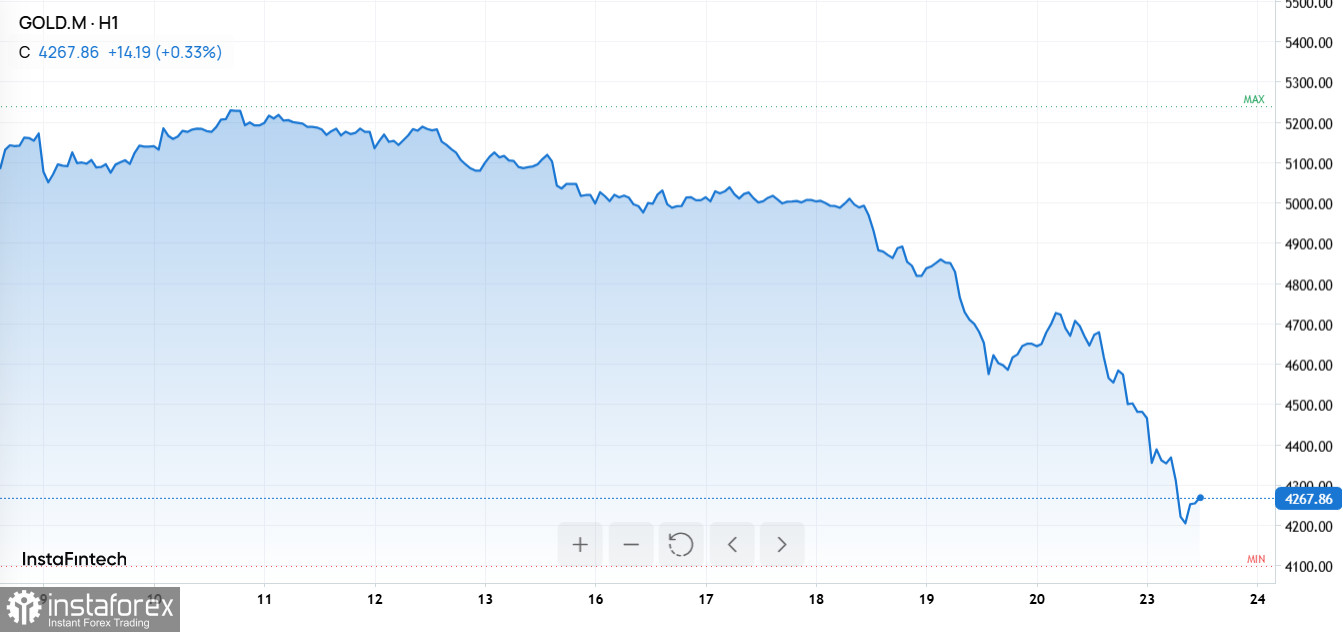
CNBC separately notes that last week gold fell almost 10 percent, its worst weekly collapse in years. Silver fell even more sharply, decreasing by more than 10% over the week.
In some regions, the dynamics look particularly dramatic. On India's MCX exchange, gold has already plunged 11 percent by mid-March, while silver collapsed 21 percent for the month, Finnotia reports.
Key takeaways for the market
Metals continue to fall on expectations of a hawkish Fed and persistent pressure from a strengthening dollar.
Inflation fears are intensifying due to rising energy prices caused by the war in Iran, leading investors to revise rate expectations.
Silver shows higher volatility and a larger decline relative to gold.
In this situation, traders can exploit market moves: sharp weakness in metals increases the chance to play the continuation of the trend or to trade short-term rebounds after the selloff, especially in a high-volatility environment.
How traders can profit from situation
The optimal tactic depends on horizon and risk profile, but in general, two scenarios are possible:
1) Trend-following to the downside: if a continuation of the decline is confirmed, consider short/sell trades with stop-loss control.
2) Level-based and reaction trading: if the market begins to form pullbacks amid oversold conditions, traders can look for entry points for recovery trades, using key levels and short time frames for confirmation.
Trading instruments linked to gold and silver movements are available on InstaTrade. To avoid missing important market impulses and to respond quickly to quote changes, users are recommended to open a trading account on the platform and, for maximum convenience, download the company's mobile application.
USD again acts as a safe-haven currency: investors flee risk amid the energy disruption
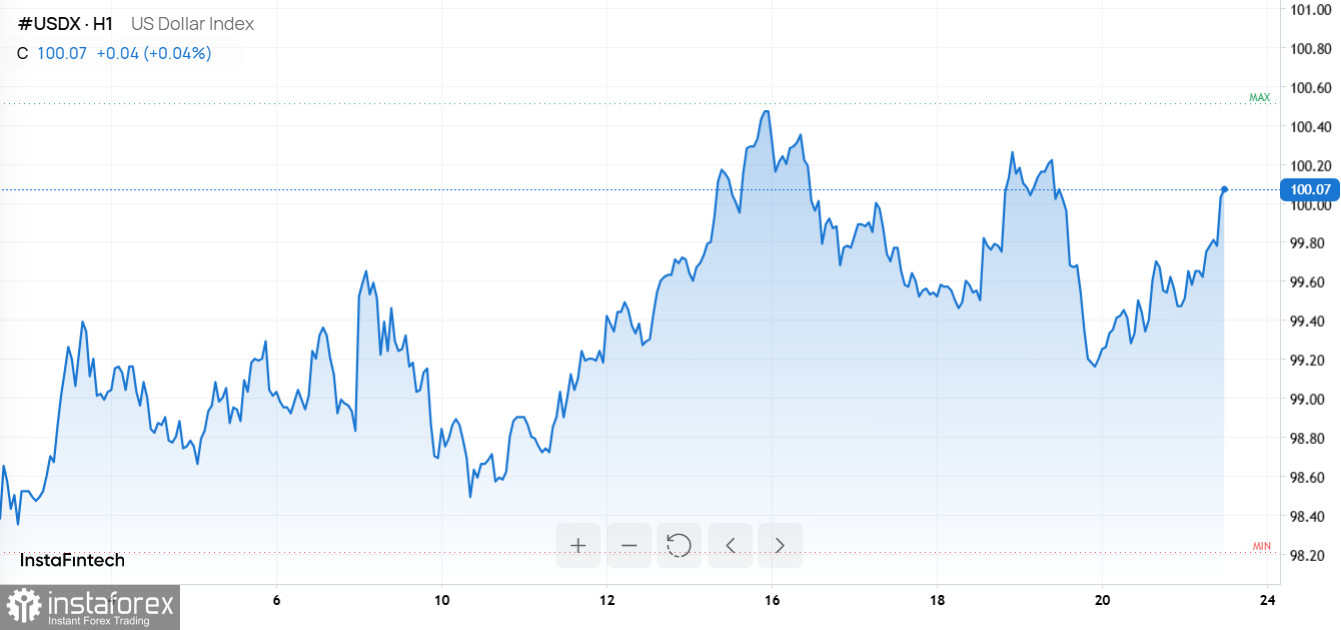
Nearly a month after coordinated strikes by the United States and Israel on Iran (February 28), the US dollar has strengthened once more as the key safe-haven currency. Against this backdrop, the US dollar index climbed above 100: investors are reducing exposure to risky assets amid the largest energy supply disruption in decades.
According to CNBC, the dollar has strengthened roughly 2% against the euro since late February. The main reason cited is a flight to safety as the ongoing Middle East conflict, which market participants estimate shows no signs of quick resolution, prompts risk aversion.
The dollar index dynamics were notable: at the end of January, it fell to a low of about 95.44, then in mid-March it settled above 100 and later stabilized at roughly 99.50 as of March 20.
Analysts note that dollar strength may be structural and directly correlated with oil price dynamics. In particular, it is suggested that the dollar can rise by 0.5 to 1% for every 10% increase in oil prices.
The logic is simple: escalation raises energy costs and, with them, risk aversion, so investors more often choose the dollar as a more reliable asset in such periods.
It is notable that the dollar's rise continues even though the United States is conducting military operations that are increasing turbulence. CBS News quoted analyst Brad Keates as saying that the U.S. financial system remained one of the deepest, safest, and most stable places to invest and that this had not changed. In his view, the dollar's strengthening over the past two weeks is confirmation that market participants still believe in the resilience of American financial infrastructure.
Key takeaways
The dollar is strengthening again as a safe-haven currency: the U.S. dollar index rose above 100 and is holding around 99.50.
The market is reacting by reducing demand for risky assets due to the Middle East conflict and the energy disruption.
Correlation with oil may persist: with a 10 percent rise in oil, the dollar could gain 0.5–1%, according to estimates.
Traders can take advantage of the situation by closely monitoring the dollar index dynamics, key geopolitical news, and oil movements: this helps to assess in advance the likelihood of continued dollar strength or a possible pause/reversal.
How to profit
In practice, this can be implemented through trading currency pairs and instruments tied to dollar dynamics (using index levels and market reaction to oil and news). It is useful to predefine scenarios (trend continuation or correction) and work with clear entry, risk, and profit-taking levels.
Global LNG exports fall to six-month low
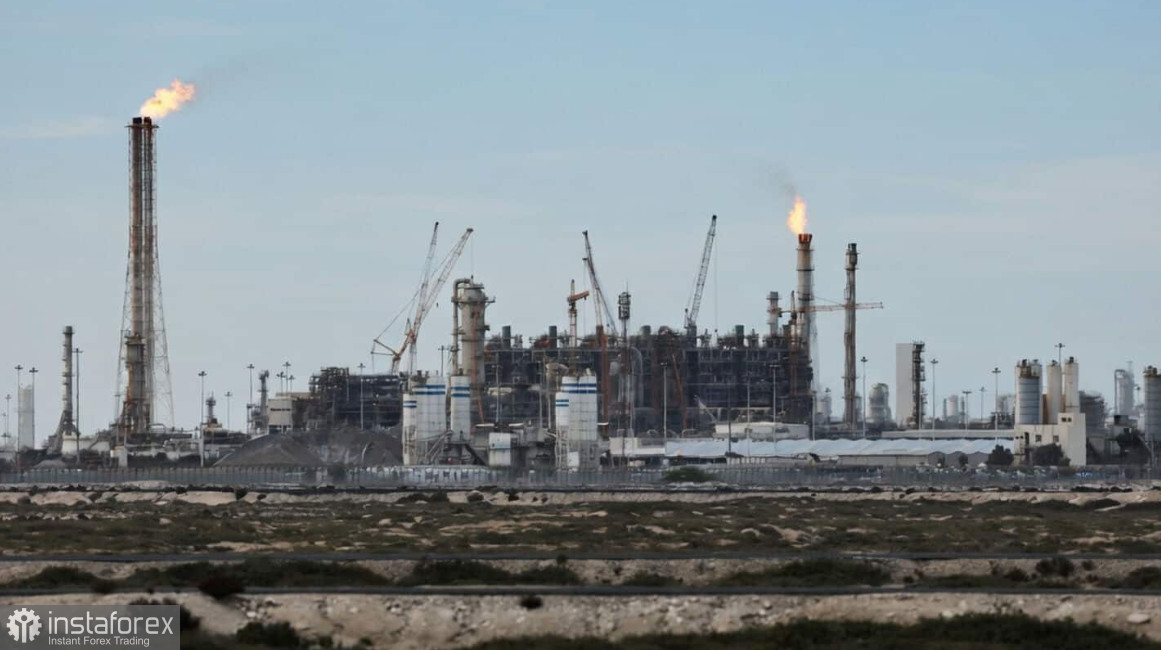
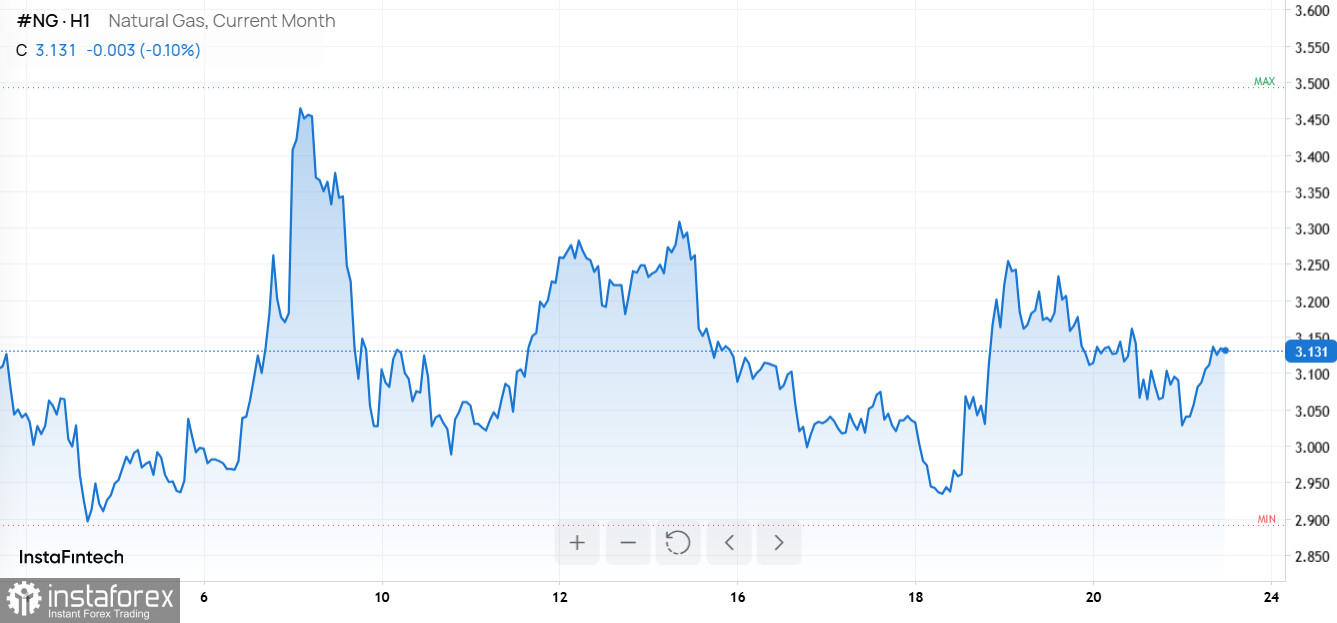
Global liquefied natural gas exports have fallen noticeably in recent weeks: the 10-day moving average of shipments dropped to a six-month low. Growth expected from new projects in the United States and Canada has effectively been offset by paralysis of key routes in the Persian Gulf amid the conflict between the United States, Israel, and Iran.
According to Bloomberg analysis using vessel tracking from Kpler, the 10-day moving average of LNG shipments declined by roughly 20 percent since early March to 1.1 million tonnes. This is the lowest level since September.
The greatest impact, it is estimated, is related to the situation in Qatar; a significant but smaller hit affected the United Arab Emirates. Both countries heavily rely on the Strait of Hormuz to deliver gas to consumers in Asia and Europe.
The situation began on February 28, when the United States and Israel struck Iranian political and nuclear sites. In response, Iran attacked nine Persian Gulf countries with missiles and drones, which effectively led to the closure of the Strait of Hormuz to commercial shipping. About one-fifth of global LNG shipments pass through this route.
The world's largest LNG producer, QatarEnergy, declared force majeure after Iranian strikes forced the company to halt production at facilities in Ras Laffan and Mesaieed in early March. An additional attack a week earlier affected the world's largest LNG export complex — Ras Laffan.
According to QatarEnergy CEO Saad al-Kaabi, cited by Reuters, two of the plant's 14 production trains were damaged. As a result, roughly 17 percent of Qatar's LNG export capacity was put out of service — equivalent to 12.8 million tonnes per year. The outage is expected to last from three to five years.
Kpler reports that no LNG tanker has passed through the Strait of Hormuz since February 28. Nearly one million tonnes of Qatari LNG remain blocked in the Persian Gulf, keeping market tension high and increasing the risk of further supply reductions in the near term.
Key takeaways
LNG logistics have been blocked due to the closure of a key route — the Strait of Hormuz.
Supply reductions are amplified not only by transport constraints but also by QatarEnergy's production losses: capacity losses are estimated at 17% (12.8 million tonnes per year) for a period of three to five years.
The market is receiving an additional demand/supply shock, which raises the likelihood of sharp moves in related assets.
How traders can use current dynamic:
1) Monitor news on the Strait of Hormuz and Qatar's production facilities;
2) Assess the pace of flow restoration and respond to changes in supply expectations.
In practice, this can be implemented through analysis of volatility, levels, and the news background (for example, looking for entry points after trend confirmation or ahead of key publications/statements).
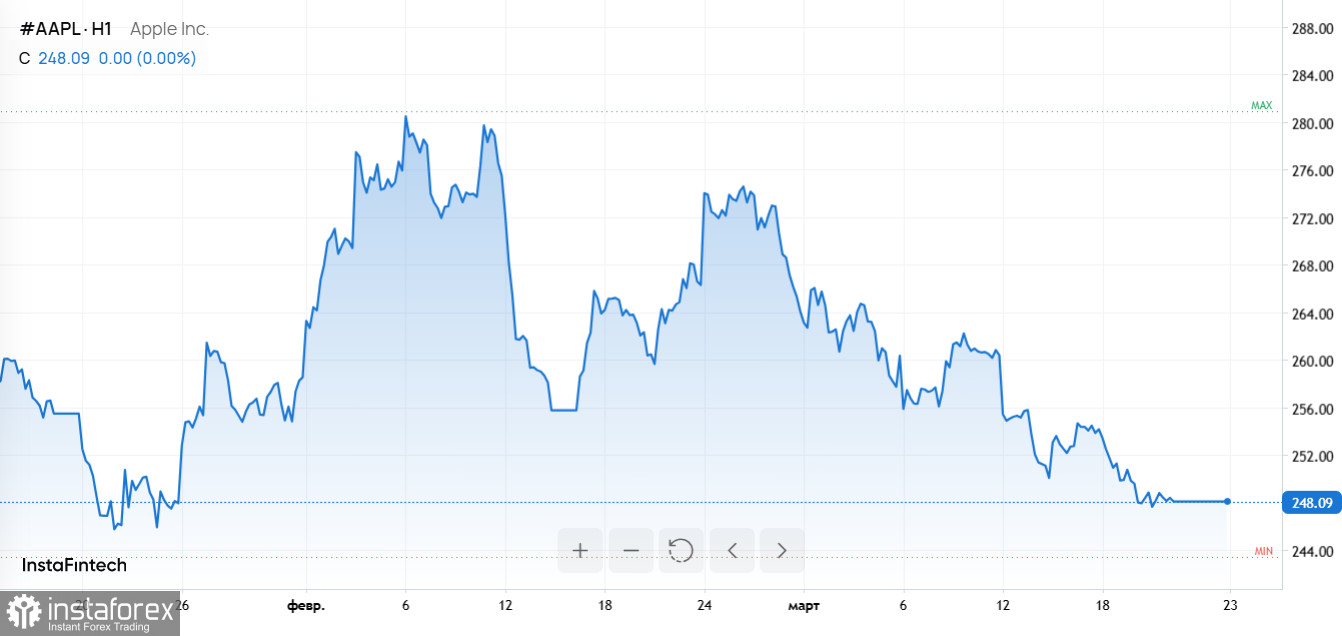
Apple sharply raises prices on external SSDs: memory shortage continues to hit consumers

Apple has significantly raised the price of external drives sold in its retail stores and on the company website. Industry sources say the price increases are linked to an intensifying global memory chip shortage that has affected consumer electronics and narrowed supply on the market.
As Bloomberg's Mark Gurman reported in the Sunday "Power On" newsletter, a 4 TB SanDisk external SSD that previously cost about $500 is now sold for nearly $1,200. The price of a smaller model rose similarly: a 1 TB SanDisk SSD increased from $120 to more than $350.
Price increases have affected multiple brands and configurations of drives both online and in Apple's physical stores. Stocks are quickly depleting, and buyers will likely face limited availability.
The price rises reflect a deeper crisis in the semiconductor industry. Memory manufacturers, including Samsung, SK Hynix, and Micron Technology, are redirecting some capacity to high-bandwidth memory (HBM) used in graphics processors for AI data centers.
As a result, consumer DRAM and NAND flash are in shortage. CNBC notes that for every bit of HBM produced, Micron is forced to sacrifice the production of three bits of standard memory.
Key takeaways
Prices for external SSDs in the Apple ecosystem have surged: 4 TB to nearly $1,200 and 1 TB to more than $350.
The reason is a continuing memory shortage due to manufacturers reallocating capacity to HBM for AI.
Limited supply supports higher prices and increases the likelihood of further availability disruptions.
The problem could persist longer than normal: forecasts for the shortage extend into 2030.
Traders can benefit from the situation, since memory shortages and capacity reallocation typically raise volatility in related sectors: semiconductors, memory components, AI infrastructure, and storage suppliers.
How traders can profit
In practice, this means market participants may consider scenarios tied to higher demand and constrained supply:
Trading instruments reflecting the described market trends are available on InstaTrade. To make market work even more convenient, download the company's mobile application and monitor the situation at any time. Open a trading account with InstaTrade and use the opportunities provided by the current market dynamics.


