
یہ بھی دیکھیں


 05.10.2026 09:24 AM
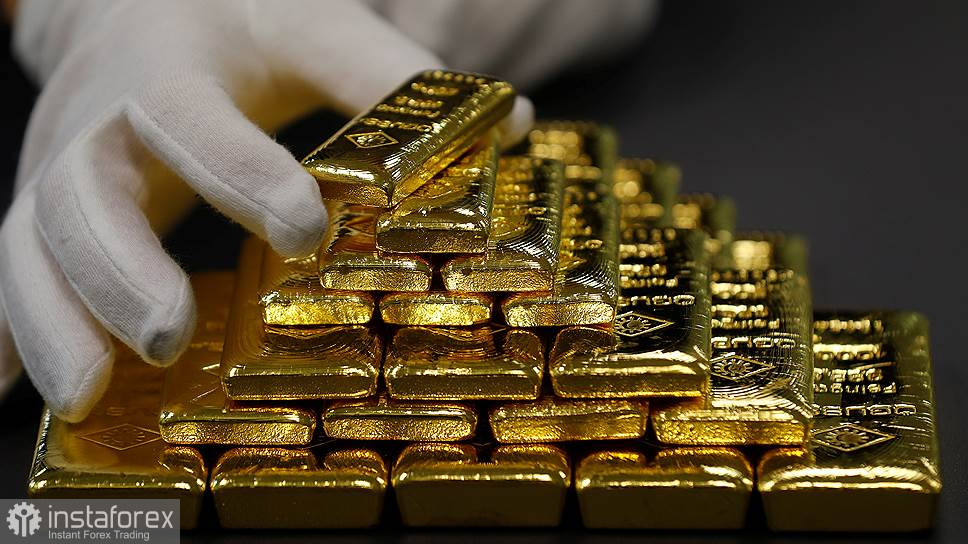
Gold gained 0.3% today and trades around $4,154 an ounce, recouping a small part of its strongest weekly drop since June. A week earlier, the metal lost 3.4%. Silver rose 1.3% to $61.15 after falling more than 6% — its worst result since mid-July. Platinum and palladium also advanced.
The main pressure on gold remains the policy rate. Gold pays no interest, so each Federal Reserve tightening raises its carrying cost. US payrolls increased by 29,000 in September, well below expectations. Against that backdrop, the probability of an October rate hike fell to roughly 20% from 70% a week earlier. One might have expected a strong gold rally, yet the metal only ticked up slightly and remains below the 100-day moving average. Clearly, much of the weekly drop occurred while the market still priced in a hawkish Fed; the employment data removed some of that pressure but did not reverse sentiment.
The inflation chain still works against the metal. Gold lost more than 6% in September amid fears that higher energy prices will drive inflation and force the Fed to tighten. Oil rallied as the conflict expanded: the Riyadh-backed Yemeni government launched a military campaign to retake areas held by the Iran-aligned Houthis, and risks to the Strait of Hormuz persist. Eurozone inflation accelerated to 3.8% in September, with energy contributing 18.8% y/y, and US August CPI was 3.4%. As long as energy remains expensive, gold trades against rising rates and strong rebounds tend to fizzle quickly.
The second factor is bond yields. Treasury Secretary Scott Bessent said rising borrowing costs align with global trends, although some rates are at multi-decade highs. The 10-year Treasury yield was about 5.26% on Monday versus 4.96% on September 14 — more than a 30 bp rise in three weeks. Higher real yields push gold out of portfolios, benefiting bondholders while hurting miners and funds that positioned for a flight from government debt into the metal.
The next signal will come from the Fed. The minutes of the September meeting, at which the rate was raised for the first time in three years, will be released midweek. Officials are moderating their tone: Philip Jefferson said last week the central bank may need more time before the next step. Fed Governor Christopher Waller indicated in early September he would be prepared to pause if inflation progress continued. If the minutes show a strong split, gold will get support; if they contain hawkish language, pressure on the metal will return.
Silver behaves like a riskier version of gold. A weekly drop of more than 6% versus gold's -3.4% shows the sell-off hit silver harder; in mid-September silver traded in a $63–$66 range, so the current $61.15 represents an additional decline.
Why didn't weak employment data send gold higher? Because the market now watches not only the Fed but also oil prices, yields, and White House policy. Weak hiring reduces the odds of an October hike, but high energy keeps inflation supported and therefore keeps rates higher for longer. In my view, the next sessions will see a limited bounce with a downward bias. If the minutes turn out hawkish and oil returns above $105, gold will likely retest $4,000–$4,100 (the July low). A reversal toward $4,350 would require a combination of a dovish minutes release, falling yields, and a sustained drop in oil — a set we do not have now, so I expect continued pressure on the metal.
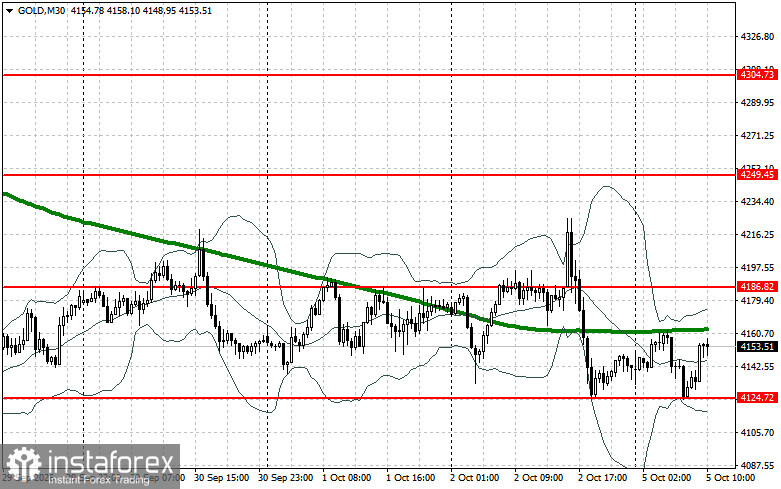
Regarding the current technical picture for gold, buyers need to take the nearest resistance at $4,186. That would allow targeting $4,249, above which a breakout will be rather difficult. The farthest target is the $4,304 area. If gold falls, bears will try to seize $4,124. If they succeed, a range break would seriously damage bulls' positions and push Gold down to $4,062, with a prospect of reaching $4,047.


