
یہ بھی دیکھیں


 18.06.2026 04:25 PM
Divide and rule. Kevin Warsh adopted the opposite strategy: unite and rule. At his first FOMC meeting as chair, he didn't rush to state his position on rates. Instead, the central bank head preferred to unite the Committee around a single goal — bringing inflation back to the 2% target. As a result, whereas the previous Fed meeting had four dissenters, June produced none.
The split showed up in the federal funds rate projections. Nine of 18 FOMC members now see a hike in 2026; only one expects a cut. In March, there were 12 "doves." Thus, the June meeting can safely be described as a hawkish pivot. It shook financial markets to the core, although nobody can yet say with certainty whether Kevin Warsh himself belongs to the "doves" or the "hawks." His task at the first meeting was to unify the Fed policymakers, and it appears he succeeded.
Market dynamics for the federal funds rate
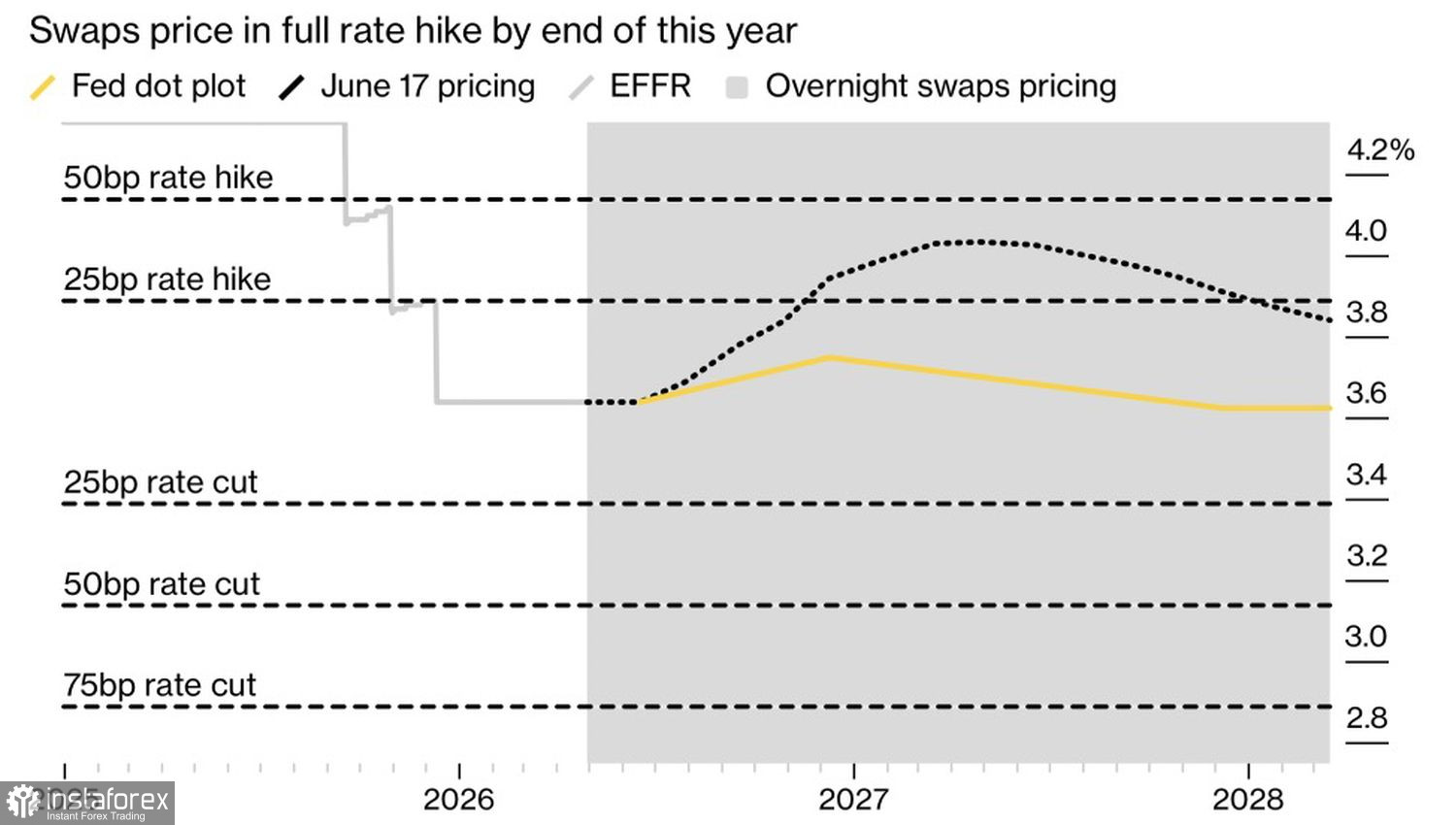
Markets raised the odds of tighter monetary policy in 2026 from 60% to 85%. That gave the US dollar more support than the downward pressure from falling oil following the announced settlement of the Middle East conflict. Donald Trump defended the deal that helped the global economy avoid a crisis. In fact, the terms differ little from Barack Obama's 2015 agreement with Iran; the current boss of the White House called it the worst deal in US history.
In any case, operations through the Strait of Hormuz are gradually resuming, and Brent has fallen below $80 per barrel. The key question for financial markets now is how quickly US inflation will slow as energy prices fall. If it happens as swiftly as the White House expects, the chances of rate hikes will evaporate quickly, and the dollar will weaken. If, on the contrary, disinflation is very slow, EUR/USD risks collapsing substantially lower.
Thus, markets are gradually shifting away from geopolitics and the Middle East conflict and refocusing on Fed and other central banks' monetary policy. The Fed's emphasis on fighting inflation and raising the federal funds rate is a tailwind for the US dollar — particularly as the Bank of England and the Bank of Japan are hesitating on further tightening, the Reserve Bank of Australia appears to have finished its cycle, and another ECB move is already priced into the euro by financial markets.
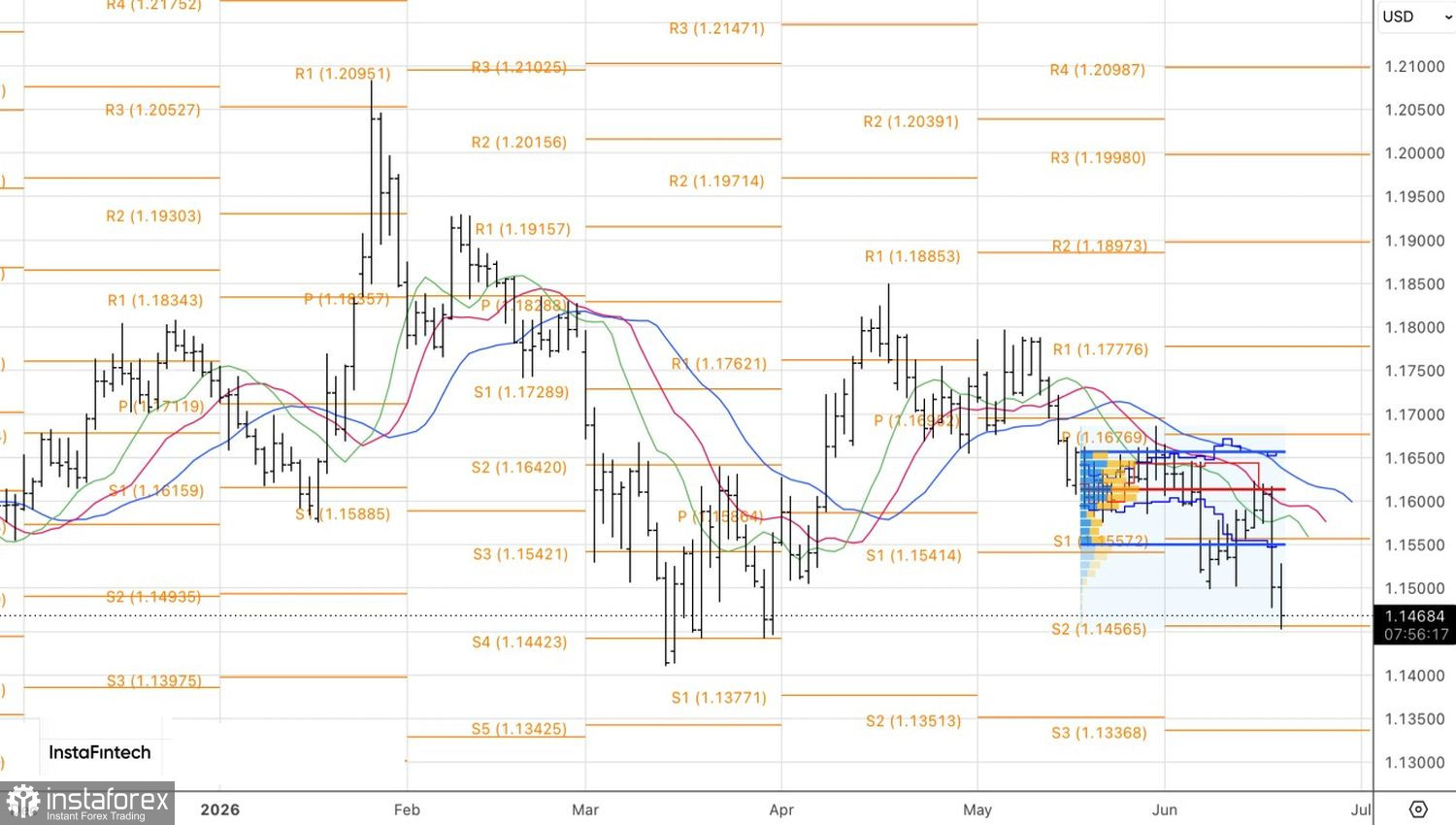
Technically, on the daily chart, EUR/USD broke out of the fair-value range of 1.1550–1.1650, which resulted in a collapse of the major currency pair. For the decline to continue, a decisive breach of the pivot level at 1.1455 is required. Conversely, a rebound off that level followed by a return of the euro above the bar high at 1.1525 would be buy signals.


