empty
 
 
22.10.2026 03:57 PM
Market snapshot: yields fall, yet gold, silver, and stocks also slide

This image is no longer relevant

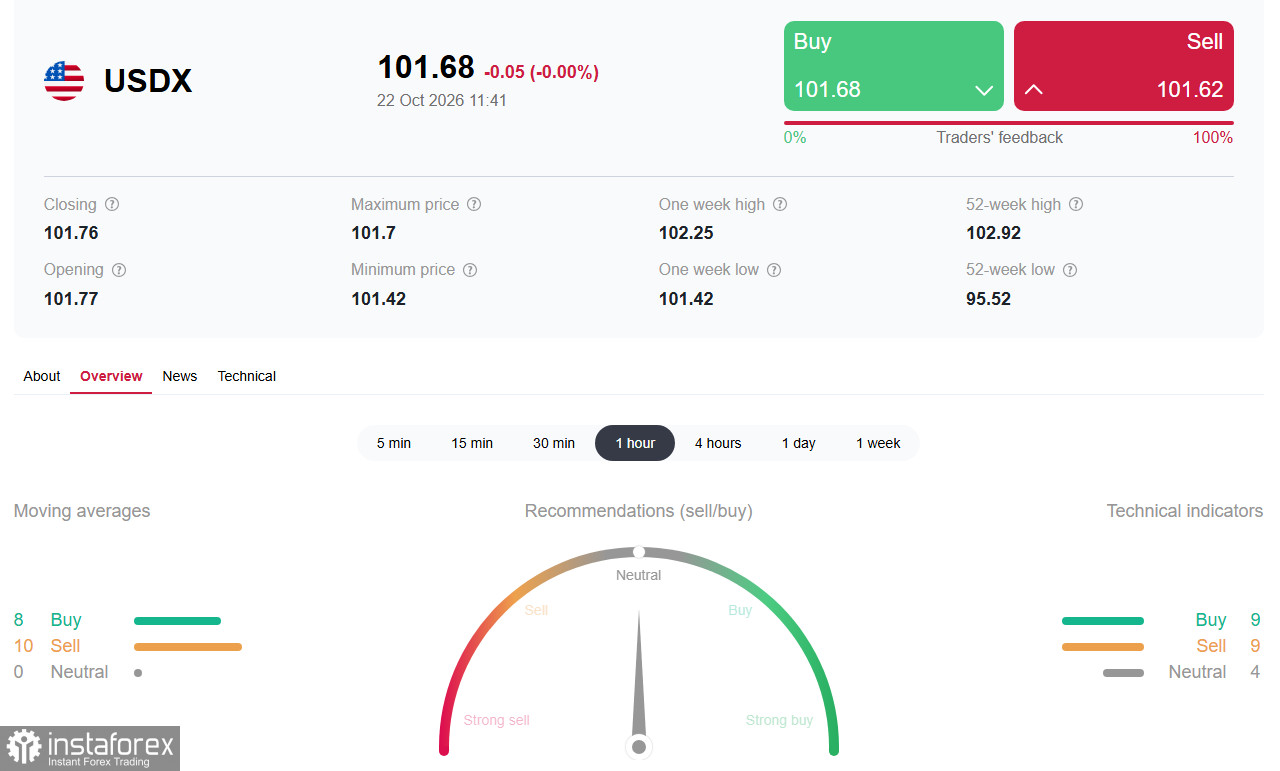
*see also: InstaTrade trading indicators for USDX

The classic playbook — yields down, risk assets up — is not functioning. The market faces a rare combination: safe-haven demand into bonds coincides with sell-offs in stocks and precious metals, while the yen strengthens. The driver is not just a shift in Fed sentiment but a toxic mix of an oil shock and a French debt crisis that breaks normal correlations.

Price action

Ten-year US Treasury yields fell by roughly 11 basis points to 5.05%, and 30-year yields eased by about 5.9 bps to 5.30%. Normally, that would support equities and gold. Instead, Nasdaq 100 futures are down about 1.7%, the S&P 500 is off about 1%, and the Dow is down roughly 0.6%. Gold slipped below $4,100/oz, and silver plunged by 3.6% to $55.80. The yen rallied to 156.80 per dollar from 158.10 on the prior day.

Key catalysts
  1. Oil. Brent jumped toward $109 after a drone strike on Saudi Aramco's Shaybah field that killed two workers. The US ordered some diplomats to leave Saudi Arabia. Paradoxically, for metals, higher oil raises inflation expectations, increases the probability of a December Fed hike, and raises the opportunity cost of holding non-yielding gold and silver. In short, inflation that triggers tighter policy can make metals less attractive even as they are traditional hedges.
  2. French bonds. France's 10-year OAT yield spiked to about 5.1%, the highest since 2002, and the spread over German Bunds widened to about 164 bps, the most since 2011. Investors are dumping French debt amid a budget crisis and political unrest. This creates global pressure on risk assets. European indices, for example, are down, and the Stoxx 600 is off roughly 0.9%.
  3. Disappointing AI earnings. Lam Research plunged by 8.5% in premarket trading. IBM fell by 5.4%. South Korea's Kospi, loaded with chip makers, closed down 3.5%. Tesla fell by nearly 5% despite beating revenue estimates after lowering capex guidance from $25bn to $20bn — a hit to confidence in the speed of its AI and robotics rollout.
  4. Yen as a refuge. The US dollar is weakening versus the yen as investors seek shelter in a currency less correlated with US risk assets. BOJ Deputy Governor Himino noted core inflation is approaching the 2% target and warned against delaying policy normalization, stoking bets on a December BOJ tightening and supporting the yen.
Market takeaways

This is not a routine "buy Treasuries, buy the dollar" response. It's a US-accented risk-off: investors buy bonds, but the dollar softens because the stress is partly homegrown (disappointing AI earnings in the US) and partly European (France). Gold and silver are falling not because investors reject protection, but because the oil shock makes that protection expensive through the lens of Fed expectations.

The key paradox of the day: yields fall, but that does not rescue stocks or metals. As long as Brent trades near $110/bbl and the French spread remains unstable, markets will sit in this fragile equilibrium. The next big trigger is the FOMC on October 27–28 — traders expect a pause but will hunt for any clue about December.

Recommended Stories

এখন কথা বলতে পারবেন না?
আপনার প্রশ্ন জিজ্ঞাসা করুন চ্যাট.