
আরও দেখুন


 17.03.2026 12:33 PM
The UK economy unexpectedly slowed in January, with GDP growth showing zero expansion and industrial output coming in below expectations. These figures contradict recently published business activity indices, which had indicated acceleration in the early months.
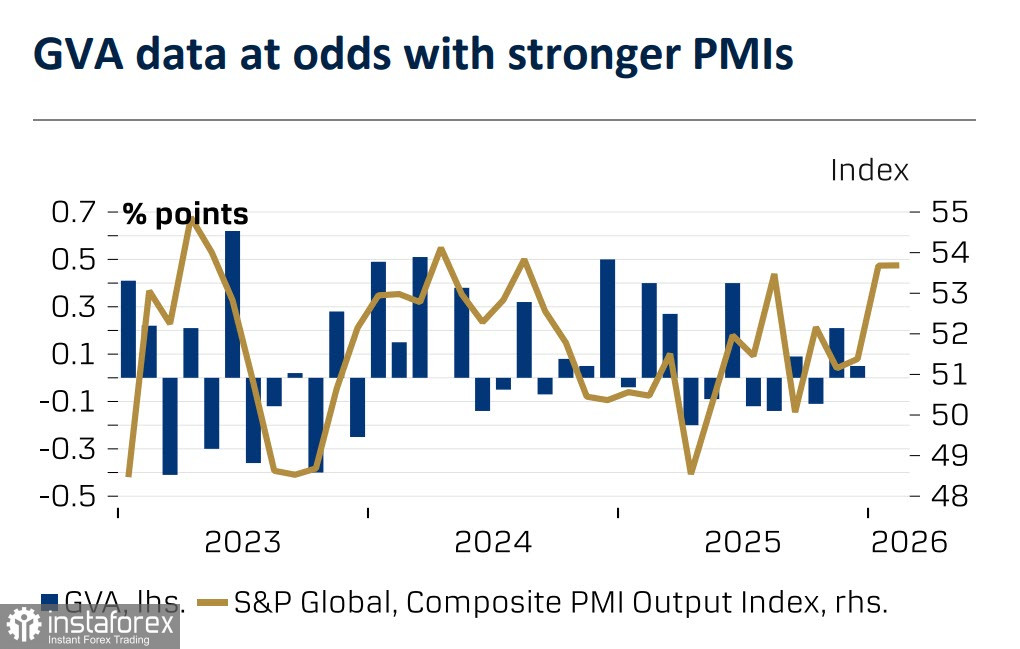
The Bank of England will hold its next meeting this Thursday, and expectations for the outcome have shifted sharply compared to those before the outbreak of the Gulf conflict. Previously, the market expected the Bank of England to cut rates twice this year, assuming inflation would finally move past last year's base effects and begin to decline steadily. The war has changed the situation dramatically, and markets are now leaning toward another rate hike instead of cuts.
Such a shift in investor sentiment could have supported the pound, but the situation is complicated by the sharp rise in energy prices, which could deal an additional blow to consumer demand and, consequently, to GDP growth. Until recently, it was assumed that economic growth in February might reach around 0.3%, which would have been sufficient for the Bank of England to maintain a pause in rates while waiting for inflation dynamics to change. However, if February GDP also falls short of forecasts, it would signal not just stagnation but a sharp increase in recession risks.
A labor market report will be released on Thursday before the meeting, but it is unlikely to influence the Bank of England's position.
The net short position on the pound increased by £1 billion over the reporting week to -£7.1 billion, indicating a significant bearish bias. This increase occurred even as expectations for tighter Bank of England policy grew. At the same time, the estimated price is attempting to turn upward, primarily due to the rapid rise in yields, again driven by expectations regarding the Bank of England's policy.
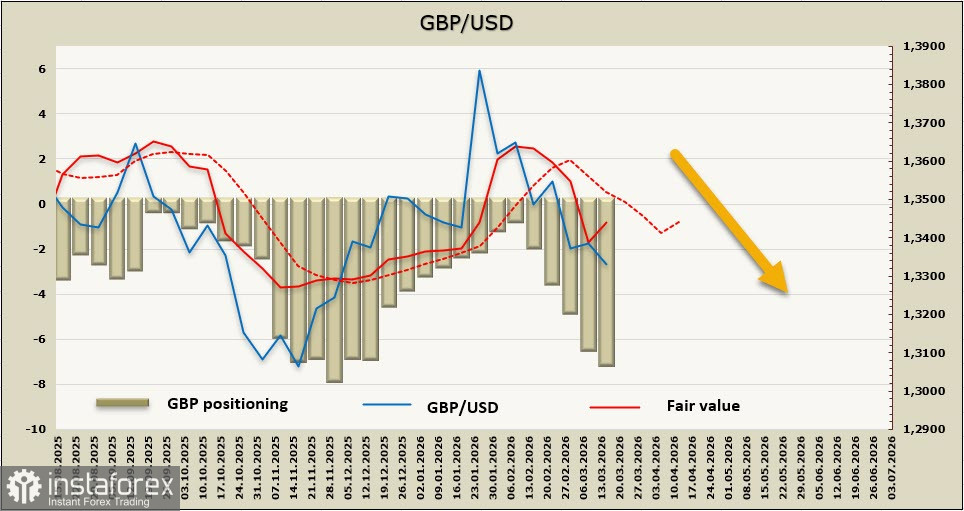
As expected a week ago, the pound updated its recent low of 1.3252 but has not yet moved toward the broader support level of 1.3000–1.3050. This may be partly due to renewed expectations that the United States could ensure the transportation of energy resources through the Strait of Hormuz by forming an international coalition. However, it is likely that the near future will demonstrate the difficulty of forming such a coalition, and the pound will resume its decline toward 1.3000–1.3050. Expectations regarding the Bank of England's rate policy are unlikely to offset two negative trends: the prolonged military conflict and, more importantly, the overall slowdown of the UK economy.


