
আরও দেখুন


 05.10.2026 09:49 AM
Donald Trump once again drew attention over the weekend with a series of statements that leave one question: in what reality is the White House leader living? He said Iran had almost given up plans to develop nuclear weapons and claimed oil prices have fallen and are generally lower than under the Biden administration. At times it appears Mr. Trump's principal competition is with his predecessor, since he mentions Biden and his "failures" almost daily.
It is worth noting that the conflict between Iran and the United States has been ongoing for eight months despite repeated promises from Mr. Trump to end it "within a couple of weeks." It is unclear on what basis he concluded Iran had renounced a nuclear program: Tehran has not reported any concessions on that issue. Moreover, Iran's parliament said on Sunday that the Strait of Hormuz will remain tightly controlled until the United States meets seven conditions set out in a memorandum of understanding.
Speaker Mohammad Ghalibaf said Iran's position on Hormuz remains clear, firm, and unchanged. He added that Iran is not interested in protracting negotiations and that the era of US diktats and ultimatums is over. As we see, Iran's stance remains constant, and its conditions are unlikely to be met by Mr. Trump. Recall that the US president does not appear keen on reopening the Strait of Hormuz: while lifting the blockade would lower fuel and oil prices, Mr. Trump apparently understands it would not save his party from a congressional defeat, so it is a factor he may be willing to ignore.
At the same time, Yemen's president Rashad al-Alimi announced the start of military operations against the Houthi group, an Iranian ally that has repeatedly threatened to close the Bab el-Mandeb Strait and continues military actions in the Red Sea and against Saudi Arabia. Iran's leader said the operation aims to crush the Houthi movement and restore all lost territory to the legitimate government. It appears the Middle East may intensify further, and the Bab el-Mandeb Strait is already on the brink.
Other articles to read
Analysis of EUR/USD. October 5. European inflation fails to attract market's attention
Wave analysis of EUR/USD
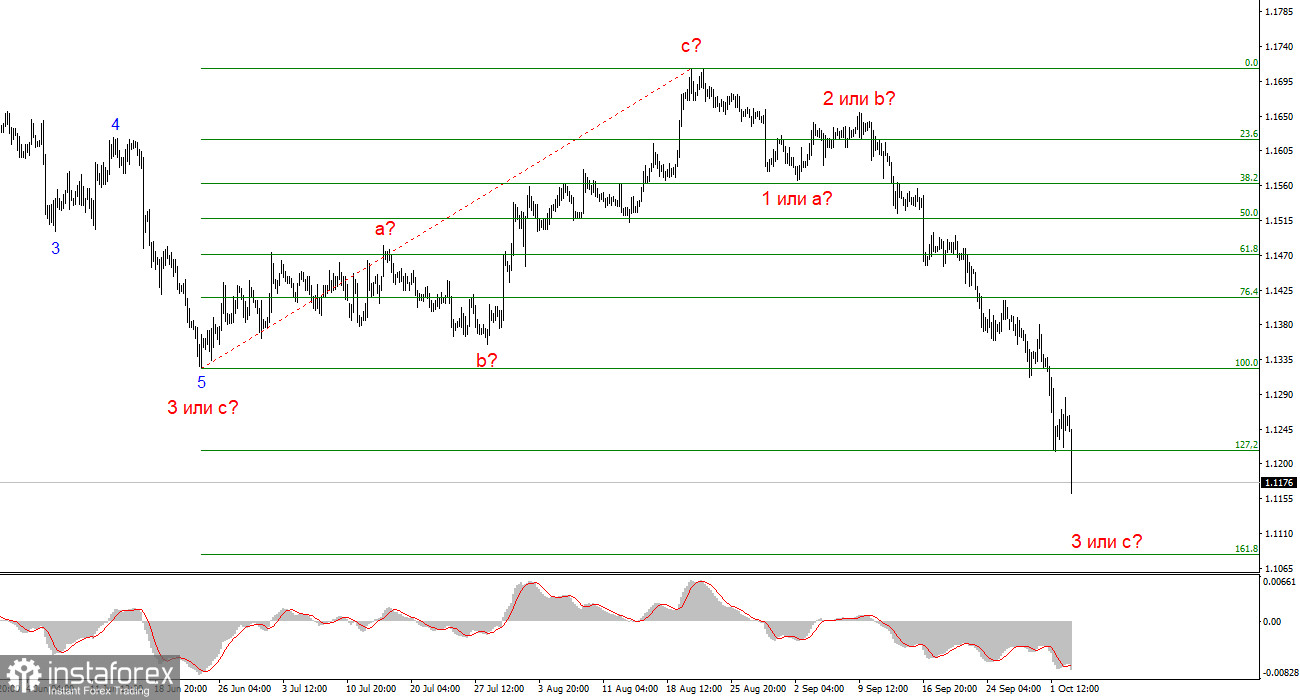
My analysis suggests EUR/USD remains within a global corrective trend segment A-B-C-D-E. If that assumption holds, declines should continue toward targets below the low of wave C—1.1325. I regarded this scenario as an alternative, and if not for the Fed meeting, it would have remained a reserve case. But the Fed surprised markets and left no option but a new wave of dollar buying. Purchases have continued for several weeks despite a lack of fresh supporting factors for the dollar. I would not open short positions in such a news environment and would instead prepare for a reversal.
Wave analysis of GBP/USD
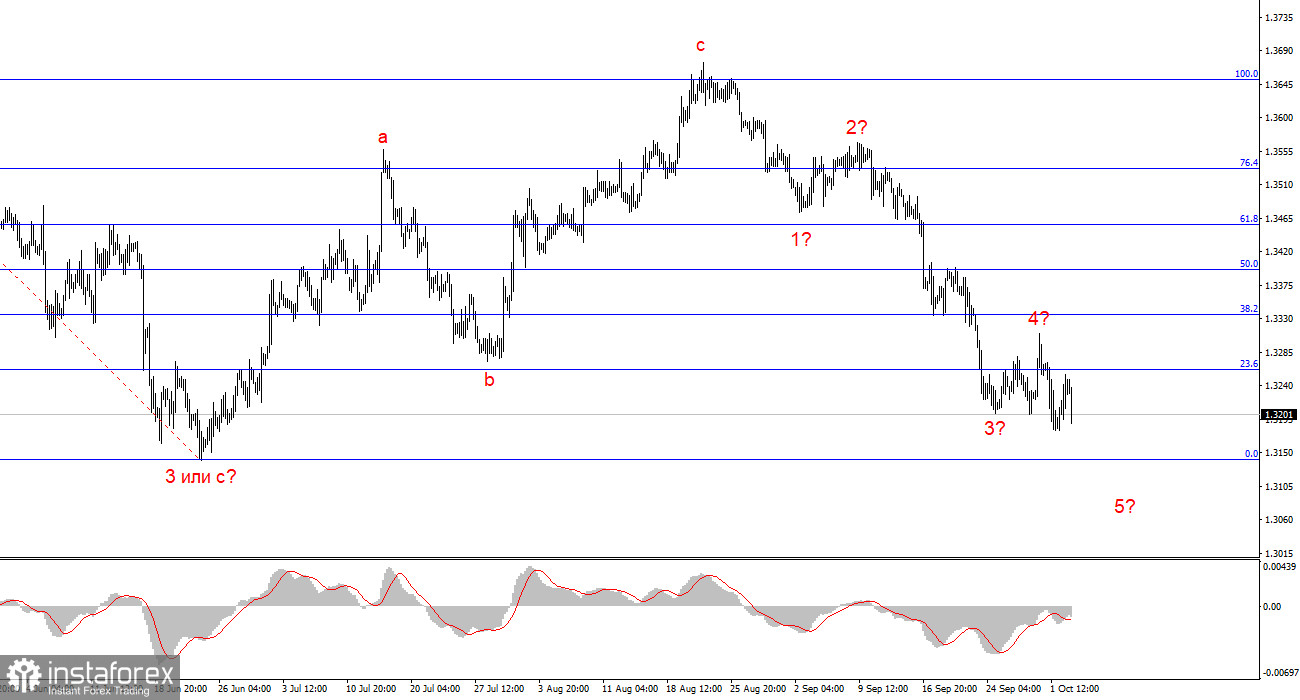
The wave structure for GBP/USD has become fairly clear but could grow more complex. Charts show a distinct A-B-C corrective structure, which after the Fed meeting could morph into A-B-C-D-E. If that reading is correct, the pound would continue to decline toward targets below the 1.31 area near the low of wave C. However, completion of a similar structure in the euro could prompt the pound's structure to finish at any stage.
Core principles of my analysis
1) Wave structures should be simple and comprehensible. Complex structures are difficult to trade and often change.
2) If you are not confident about market conditions, it is better to stay out.
3) There is never 100% certainty about direction; do not forget protective stop-loss orders.
4) Wave analysis can be combined with other analytical methods and trading strategies.


